
Types of Cataracts
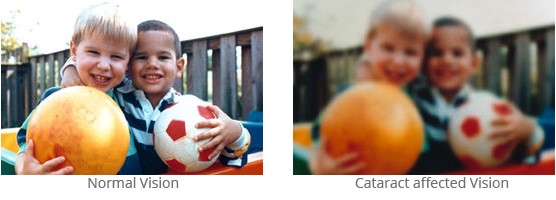
As we get older the the protein in our lens, which is normally perfectly arranged to let light pass through and keep the lens clear, may start to clump together and start to cloud in a small area of the lens. This clouded area may grow over time, making vision more blurred.
Cataracts Risk Factors
Age, diabetes mellitus, corticosteroid use, female gender, socio-economic status, ethnicity, smoking and alcohol are all cataract risk factors.
Most Common Types Include:
- Age-related: The most common type of eye cataracts is age-related, which affects almost one-third of the UK’s adult population. It manifests in cloudy eyes, blurred vision, visual imbalances, inability to see in low light and dulling of colours. This is the easiest type to treat out of the four listed.
- Congenital: Occurs in very few people; this type of cataract exists from birth or develops in childhood. Just like other cataracts, both eyes are affected and the symptoms vary depending on the severity and degree of onset. The cause is not clearly documented, but chromosomal defects or infections in the womb are highly associated with the condition.
- Secondary: Occur in the presence of conditions such as diabetes, drug and alcohol abuse or exposure to toxic substances such as radioactive rays and steroids.
- Traumatic: As the name implies, these occur as the result of an eye injury, and in some rare cases can be caused by electric shock.
Cataract Surgery Techniques
Cataracts can be treated by removing the cloudy lens and replacing it with an artificial plastic lens (an intraocular implant). Cataract surgery can be carried out in three ways, but each technique is dependent on the severity of the trauma that necessitated the surgery. The techniques are:
Phacoemulsification: Involves breaking the cataract into small pieces using ultrasound before the fragments are sucked out through a thin tube. The same incision is used to insert a replacement lens and functions like the extracted natural lens.
Extracapsular Cataract Surgery: This technique is adopted when the cataracts are at an advanced level and cannot be broken down using phacoemulsification. It is performed under local anaesthesia, and the doctor may recommend oral sedatives to relax the patient. The surgeon makes a small incision in the eye to remove the defective lens.
Intracapsular Cataract Surgery: This type of surgery involves creating a relatively large incision compared to the other techniques. This technique is mostly used for people with extreme trauma. The larger incision makes it possible for the surgeon to remove the lens fully and in its place put an artificial intraocular lens.
Although cataract surgery is considered a low-risk procedure, some complications have been reported, including Posterior Capsular Opacification (PCO) resulting from additional cell growth in the lens and Cystoid Macular Oedema resulting from fluid build-ups between the layers of the retina. Other common complications include retinal detachment, inflammation, corneal damage and eye infections.
Do I Need Cataract Surgery?
At first, you might not notice that there’s anything wrong with your eyesight, which is why you may not be aware you have a cataract until it’s identified by an optician in your annual eye examination. However, as the cataract develops, your vision gets worse, and it’s when your vision becomes severely affected that an operation is recommended. But you don’t always have to wait until that point to have cataract surgery, especially if you’re seeking private treatment for it or are heavily reliant on your eyes for your job (e.g. driving).
Access To Cataract Surgery
There is currently a wide variation in access to cataract surgery across England due to differences in health commissioning policies. A recent study found 9 in every 10 cataract surgery commissioning policies contained criteria that followed “neither national guidance nor scientific evidence.”
Half of the commissioners were found to have restricted access to cataract surgery by using clinical thresholds, and 1 in 3 made no allowance for second eye surgery. Accessing quality cataract surgery on the NHS really a postcode lottery at the moment.
Additionally, there is almost a threefold variation in the number of people having cataract surgery across England, with rates ranging from 285 to 804 per 100,000 population which cannot be fully explained by variations in known risk factors for the development of cataract.
Can I Get Cataract Surgery Free on the NHS?
Access to NHS cataract surgery can still vary by area and waiting times can differ significantly, which is one reason some patients explore private treatment. Private cataract surgery can also offer faster access, more choice over lens type, and in some cases the option to have both eyes treated closer together than under standard NHS pathway
Preparing for Cataract Surgery
Prior to your surgery, the surgeon will measure your eyes and vision a number of times to ensure the artificial lens they’re placing within them is right for you. They will also discuss your medical history, existing medical conditions and other vision problems to make sure there aren’t too many risks involved in the procedure.
The operation itself is done under local anaesthetic and normally takes around 45 minutes (if you have cataracts in both eyes these will be done one at a time, 6 to 12 weeks apart). This means you’ll be able to go home after your operation, but you will need to arrange transport as you won’t be able to drive straight after.
How Quickly Will I Recover from Cataract Surgery?
Within a few hours of the procedure you should be discharged from hospital, and you will need to get plenty of rest for the next two or three days. During this time, and for a month after your surgery, it’s important you use the antibiotic drops that have been prescribed by your surgeon (to keep your eyes moist and prevent any infections/inflammation). You may also need to wear a dressing for 24 hours and may be advised to wear a patch at night to prevent you from rubbing your eye(s) in your sleep.
Some patients will experience mild discomfort post-surgery but this shouldn’t last long and over-the-counter painkillers should help ease this. After a few days, you’ll also be able to resume your normal daily activities, while being careful not to get anything in your eye (e.g. water or soap) for several weeks. Apart from that, you should notice a great improvement in your vision almost straight after your surgery.
What Risks Are Involved in Cataract Surgery?
There are some risks involved in cataract surgery, just like there is with any other type of operation. However, the chance of you suffering from one of these risks is very small.
- Posterior capsule opacification (PCO) is the most common complication that arises after cataract surgery, occurring when the skin starts to grow over the implanted lens, causing your vision to go cloudy or blurred. However, this can be easily rectified with a small procedure, whereby a YAG laser is used to create an incision in this overgrown membrane so your vision becomes clear once again.
- Other typical complications include an eye infection or inflammation to the eye, which can often be treated with antibiotic drops before it gets worse; a dislocated artificial lens, requiring another operation to put it back in place; some or all of the cataract dropping into the back of the eye; retinal detachment; a tear in the lens capsule and bleeding inside the eye. In other cases, the surgeon may be unable to remove the entire cataract or place an artificial lens within the eye.
- The majority of these cases can be treated with further surgery or medication and shouldn’t have any long-lasting effects on your overall vision. Only around 1 in 1,000 patients suffer vision loss after the initial procedure.
Can Cataracts be Prevented?
This is still a much-debated topic but there are some studies which suggest certain nutritional supplements and nutrients could prevent the onset of cataracts. These include vitamin E, vitamin C, omega-3 fatty acids and the carotenoids zeaxanthin and lutein.
Another study also found that smoking can increase a person’s risk of developing age-related cataracts.
Furthermore, attending regular eye examinations can help. Although it won’t prevent cataracts from developing it does help your optician spot them at an early stage so you can seek treatment before they have a severe impact on your vision.
Useful Resources
 | Understanding Cataracts Publisher: Royal College of Ophthalmologists & Royal National Institute of Blind People |
| Understanding Cataracts: Specific Questions Relating to Cataracts Publisher: The Royal College of Ophthalmologists and the Royal National Institute of Blind People |
| Cataracts & Driving Publisher: UK Government |
| Treating cataracts by implanting multifocal lenses Publisher: National Institute for Health and Clinical Excellence (NICE) |
| Alarm Over Reports of Growing Number of Patients Denied Cataract Surgery Publisher: The Royal College of Ophthalmologists & The Royal National Institute of Blind People |
